How Long Does a Toyota Camry Hybrid Battery Last?
A Toyota Camry hybrid battery typically lasts 8 to 12 years, or roughly 120,000 to 200,000 miles (200,000 to 300,000 km), in normal everyday driving. Many last even longer with good maintenance, while cars used heavily, such as rideshare and taxi Camrys, often reach the end of battery life sooner, in 4 to 7 years.
That range is wide for a reason: battery life depends far more on how the car is driven and maintained than on age alone. Below is what actually determines how long your Camry hybrid battery will last, how the different generations compare, the early warning signs of a failing battery, and what you can do to extend its life.
Toyota Camry hybrid battery life at a glance:
| Typical private use | Heavy use (rideshare/taxi) | |
|---|---|---|
| Years | 8-12 years | 4-7 years |
| Distance | 120,000-200,000 mi (200,000-300,000 km) | varies by cycling, not distance |
These figures apply to the main high-voltage hybrid battery, not the small 12V auxiliary battery, which is a separate part that lasts 3-5 years and is inexpensive to replace.
How Long Does Each Camry Hybrid Generation Last?
The Camry Hybrid has used three generations, and they do not all age the same way, mainly because the battery chemistry changed.
2007-2011 Camry Hybrid (40 Series). Uses a nickel-metal hydride (NiMH) battery. These cars are now old enough that most original batteries have already been replaced. A well-kept original pack typically reached 8-10 years and often well past 120,000 miles (200,000 km).
2012-2017 Camry Hybrid (50 Series). Also nickel-metal hydride, and the most common Camry Hybrid on the road. This generation shows the widest spread: a gently driven private car can reach 10-12 years, while the same model in full-time rideshare service often fails in 4-6 years.
2018-2021 Camry Hybrid (70 Series). Switched to lithium-ion. Lithium ages more gradually and is projected to last 10-12 years in private use, though it is sensitive to sustained heat, so a hard-driven high-mileage example can still need attention earlier.
The takeaway is that newer is not automatically longer-lived. A carefully driven 2013 Camry can outlast a hard-driven 2019 one, because usage matters more than model year.
What determines how long a Camry hybrid battery lasts?
This is the part most articles skip, and it is the part that actually answers the question. Two identical Camrys can have battery lives a decade apart. Here is what makes the difference, in order of impact.
Driving pattern and duty cycle
A hybrid battery is rated by charge cycles, not calendar years. Every time the battery charges and discharges, it uses a small part of its total life. A private car doing one or two cycles a day will last far longer in years than a rideshare car doing six to ten cycles a day, even though the battery is identical. This single factor explains most of the difference in Camry battery life.
The cooling system and cooling fan
The Camry hybrid battery is cooled by a fan that draws air from inside the cabin through a vent. Over time that vent and fan clog with dust and pet hair, airflow drops, and the battery runs hotter than it should. Heat is the enemy of battery life, so a neglected cooling fan can take years off a pack. This is one of the most common and most preventable causes of early failure. Cleaning the fan and intake every 2-3 years is the highest-value maintenance you can do for battery life.
Climate
Hot climates shorten hybrid battery life because heat accelerates the chemical breakdown inside the cells. The same Camry will generally get more years from its battery in a cool climate than a consistently hot one. Parking in shade or a garage helps reduce this heat stress.
Driving frequency
Leaving a hybrid unused for long stretches lets the battery slowly self-discharge, which can accelerate aging. Hybrids prefer to be driven regularly. Short trips that never let the system warm up and cycle efficiently also add wear over time compared with longer, steadier drives.
Driving style
Hard acceleration and heavy braking put more strain on the battery than smooth driving. Gentle, anticipatory driving lets the hybrid system work the way it was designed to and reduces stress on the pack.
Signs Your Toyota Camry Hybrid Battery Is Wearing Out
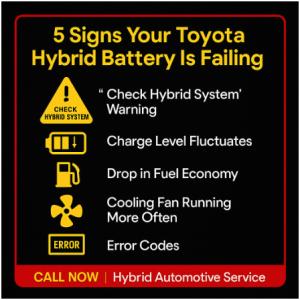
Knowing if your Toyota Camry Hybrid battery is failing is crucial for maintaining the performance and efficiency of your vehicle. Here are detailed signs that your hybrid battery might be going bad, along with some factual data:
1. Reduced Fuel Economy:
- Symptom: One of the first and most noticeable signs of a failing hybrid battery is a drop in fuel efficiency. You might find yourself needing to refuel more often.
- Data: The hybrid system relies on the battery to assist the gasoline engine, especially during low-speed driving. A weak battery can’t provide sufficient support, causing the gasoline engine to work harder and consume more fuel.
2. Unusual Engine Noises:
- Symptom: You might hear strange noises coming from the engine or the area where the battery is located. This could be due to the gasoline engine running more frequently to compensate for the battery’s reduced performance.
- Data: The hybrid system is designed to run smoothly and quietly. Any deviation from this, like increased engine noise, can indicate that the hybrid battery is not functioning correctly.
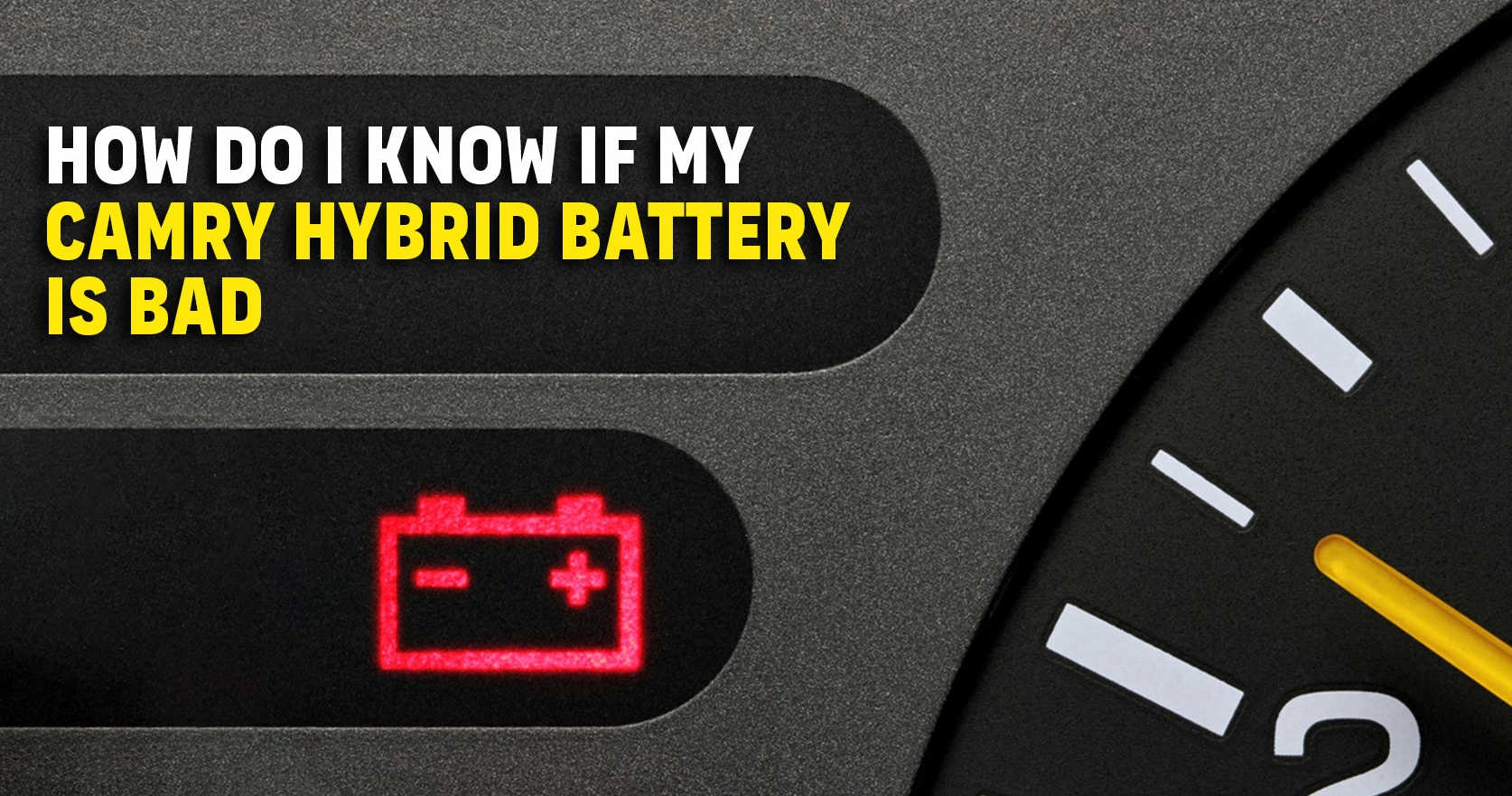
3. Hybrid System Warning Light:
- Symptom: The hybrid system warning light or the “Check Hybrid System” message on the dashboard is a clear indicator that there is an issue with the hybrid battery.
- Data: The onboard diagnostics system constantly monitors the performance of the hybrid components. If it detects a problem, it triggers the warning light to alert the driver.
4. Decreased Battery Charge Retention:
- Symptom: You might notice that the battery charge level drops faster than usual or that it doesn’t hold a charge as long as it used to. The battery may also take longer to recharge.
- Data: Hybrid batteries are designed to hold a certain charge level and discharge at a controlled rate. As the battery ages and loses capacity, it can’t retain charge effectively, leading to quicker depletion and slower charging.
5. Diminished Performance in Electric-Only Mode:
- Symptom: The car may not stay in electric-only mode for as long as it used to, or it may struggle to switch to electric mode at all. You might also notice a lack of power during acceleration.
- Data: The hybrid battery provides the necessary power for the electric motor. When the battery is weak, it can’t supply adequate power, reducing the time the car can run on electric power alone and affecting overall performance.
Diagnostic Steps
- Monitor Fuel Economy: Monitor your fuel consumption over time. A significant decrease in miles per gallon (MPG) can indicate battery issues.
- Listen for Noises: Pay attention to any unusual sounds from the engine compartment, particularly when starting the vehicle or during low-speed driving.
- Dashboard Warnings: Regularly check the dashboard for any warning lights or error messages. If the hybrid system warning light appears, it’s essential to have the vehicle inspected by a professional.
- Check Charge Levels: Observe how the battery charges and discharges. Rapid changes in charge levels or a consistently low charge can indicate a problem.
- Performance Checks: Test the vehicle’s performance in electric-only mode. Reduced power or difficulty staying in electric mode can indicate battery deterioration.
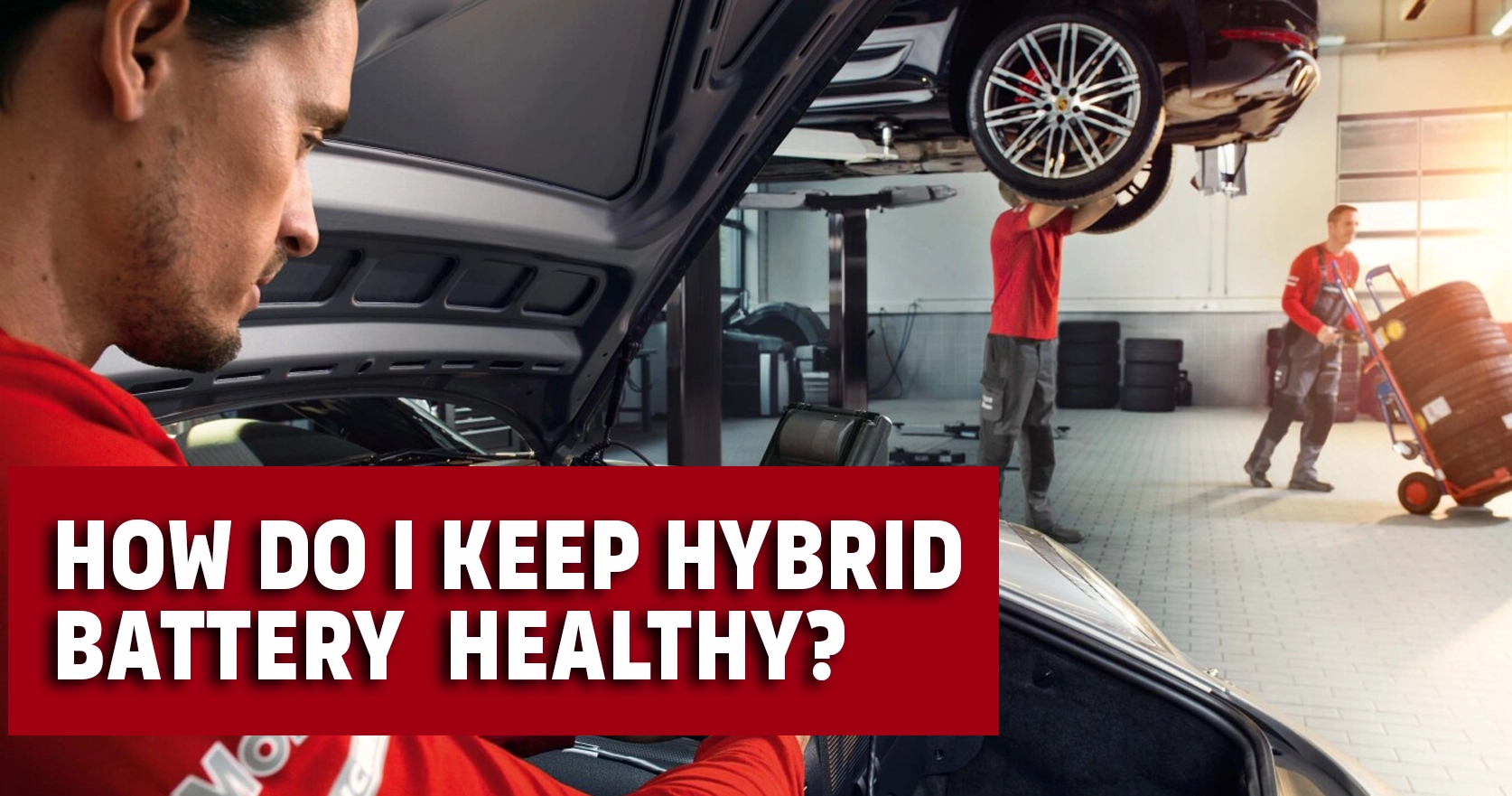
How Do I Keep My Hybrid Battery Healthy?
Keeping your hybrid battery healthy is essential for the longevity and efficiency of your Toyota Camry Hybrid. Here are detailed steps to maintain the health of your hybrid battery, supported by factual data:
Follow the Manufacturer’s Recommended Maintenance Schedule
- Regular Inspections: Ensure that your car undergoes regular check-ups as specified in the owner’s manual. Toyota advises regular inspections of the hybrid system components, including the battery, as part of scheduled maintenance.
- Professional Servicing: Having your car serviced by professionals who are trained to handle hybrid systems can help identify and address potential issues early. This includes checking for software updates that optimize battery performance.
Avoid Extreme Temperatures as Much as Possible
- Heat and Cold Effects: Extreme temperatures can significantly impact the performance and lifespan of your hybrid battery. High temperatures can cause the battery to overheat, while extremely cold temperatures can reduce its efficiency.
- Climate Control: If you live in an area with extreme temperatures, try to park your car in a garage or shaded area during hot weather and in a warm garage during cold weather. Using the climate control system to maintain a stable temperature can also help protect the battery.
Drive Your Car Regularly to Maintain Battery Charge
- Regular Use: Hybrid batteries are designed to be used regularly. Driving your car frequently ensures that the battery stays charged and prevents it from becoming overly depleted.
- Charge Cycling: Hybrid systems are built to optimize battery charge cycles. Regular driving helps maintain the proper charge and discharge cycles, which is crucial for battery health. If your car sits idle for extended periods, it may affect the battery’s ability to hold a charge.
Ensure That Your Cooling System for the Battery Is Clean and Functioning Properly
- Battery Cooling System: Hybrid batteries are equipped with cooling systems to prevent overheating. Ensure that the cooling system, including vents and fans, is clean and free of obstructions.
- Regular Cleaning: Check and clean the air intake vents for the battery cooling system periodically. Dust and debris can block airflow, causing the battery to overheat and degrade faster.
What Happens When The Battery Reaches The End Of Its Life?
When a Camry hybrid battery wears out, the car does not stop running. It keeps driving using the petrol engine, but fuel economy drops, performance softens, and the dashboard warnings appear. At that point owners usually choose between a new battery, a reconditioned one, or in rare cases replacing the car.
For most Camrys, replacing the battery is worth it. The engine and transmission are famously durable and routinely outlast the original battery by many years, so a new pack restores the car to near its original economy and performance for a fraction of the cost of a new vehicle.
For current replacement options and pricing across the 40, 50 and 70 Series, see our Toyota Camry hybrid battery replacement page.
Is It Worth Replacing a Toyota Camry Hybrid Battery?
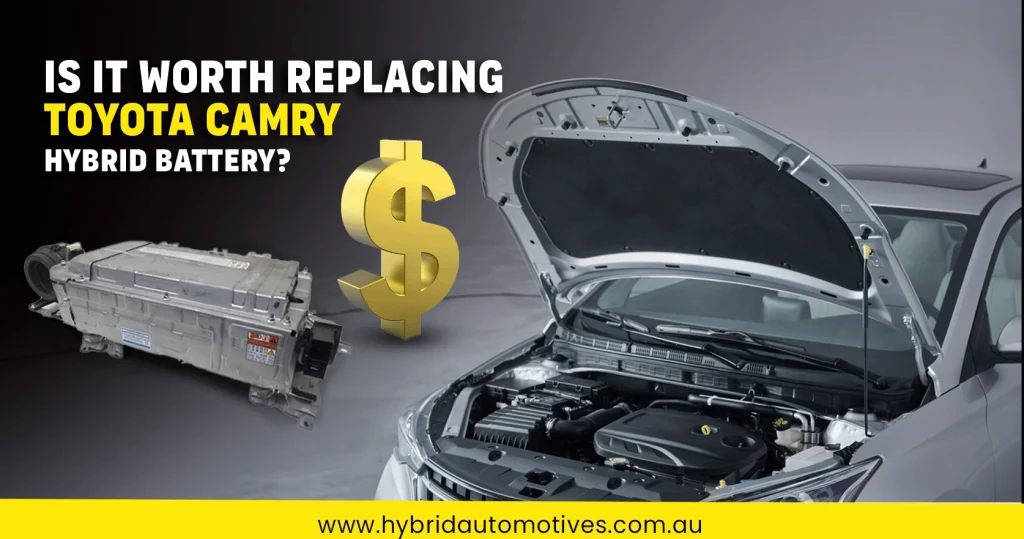
Yes, Replacing a Toyota Camry hybrid battery can be a wise investment. A new battery can extend the life of your vehicle, restore fuel efficiency, and improve overall performance. While the cost may be significant, it is often more economical than purchasing a new car. Additionally, replacing the battery can enhance the car’s resale value. Here’s a breakdown of considerations to help you decide:
Condition of the Vehicle
- Overall Condition: If your Camry is in excellent condition with no major issues, replacing the battery can keep it running efficiently for many more years.
- Maintenance History: A well-maintained car is more likely to benefit from a new battery than one with a history of neglect or other mechanical problems.
Usage and Future Plans
- Long-Term Ownership: If you plan to keep the car for several more years, a new battery can be a good investment, providing reliability and better fuel efficiency.
- Resale Value: A new hybrid battery can enhance the resale value, making the car more attractive to potential buyers if you decide to sell it.
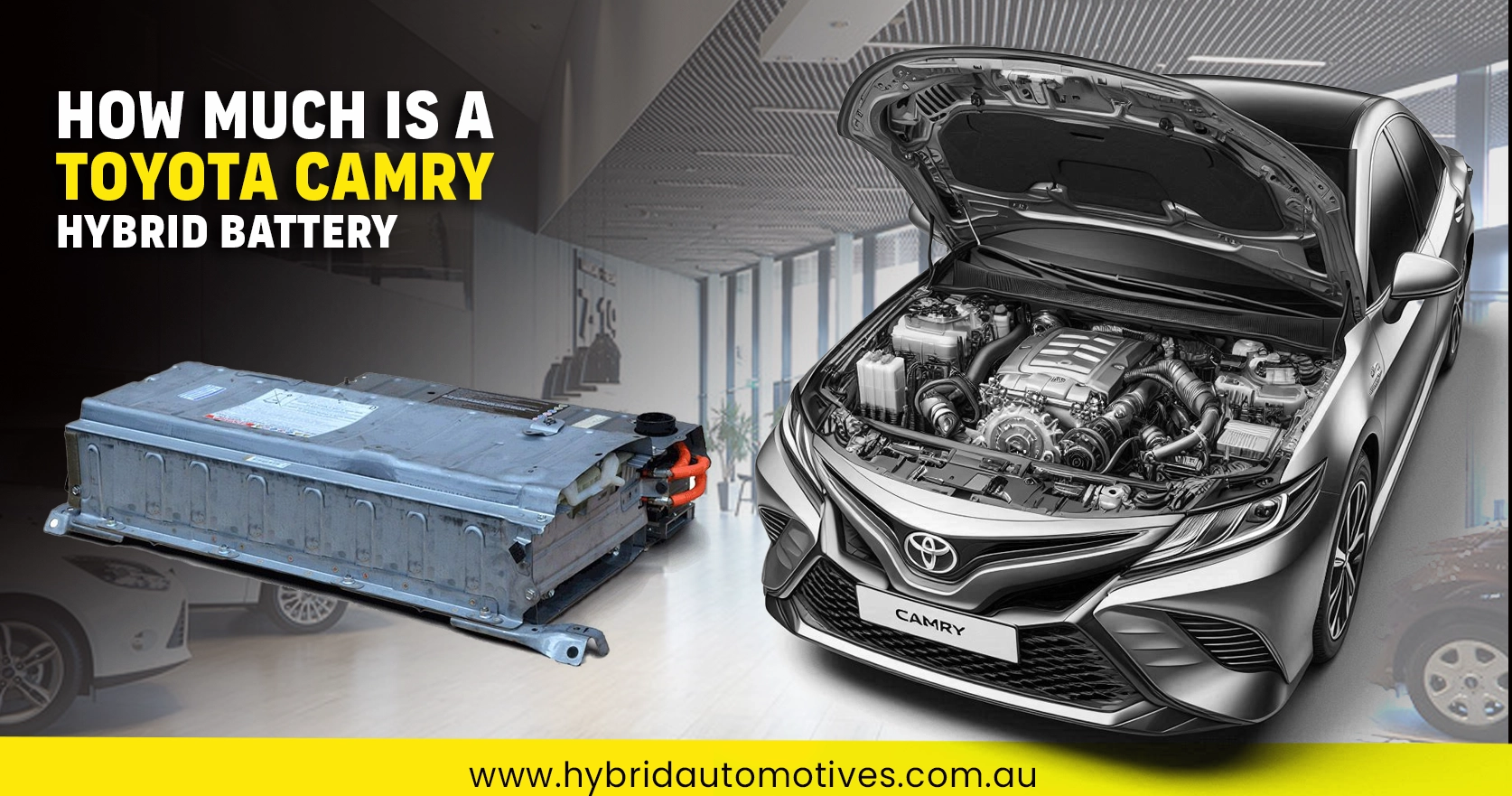
How Much Is a Toyota Camry Hybrid Battery?
The cost of a new Toyota Camry hybrid battery can range from $2,000 to $5,000, depending on the model year and the dealership or service center. Prices may vary, so it’s advisable to shop around for the best deal. Here’s a more detailed breakdown:
Factors Influencing the Cost
1. Model Year:
- Older Models: Batteries for older Camry Hybrid models might be less expensive, as they may use older technology. However, availability can sometimes be an issue, which might affect price.
- Newer Models: Newer Camry Hybrids often have more advanced battery technology, which can be more costly. These batteries might offer better performance and longer life but come at a higher price.
2. Type of Battery:
- New Batteries: Purchasing a brand-new hybrid battery from a Toyota dealership typically falls within the $2,000 to $5,000 range. New batteries come with the latest technology and a full warranty.
- Refurbished Batteries: A refurbished or reconditioned battery can be a more economical option, often costing between $1,500 and $2,500. These batteries have been repaired and tested to ensure they meet performance standards but may come with a shorter warranty period.
3. Dealership or Service Center:
- Authorized Dealerships: Getting a battery from an authorized Toyota dealership can ensure quality and compatibility but may come at a higher price due to dealership overheads.
- Independent Service Centers: Independent or specialist hybrid service centers might offer competitive pricing and discounts. However, it’s essential to verify their credentials and warranty terms.
4. Labor Costs:
- Installation: The cost of labor for installing a new hybrid battery can vary, typically ranging from $500 to $1,000. The cost of installation can vary depending on the complexity of the process and the hourly rates charged by the service center.
- Additional Services: Some service centers might include additional services, such as diagnostic checks or software updates, as part of the installation package.
What Is the Warranty on a Toyota Camry Hybrid Battery?
Toyota typically offers an 8-year or 100,000-mile warranty on hybrid batteries. However, newer models often come with an extended warranty of up to 10 years or 150,000 miles, providing additional peace of mind for hybrid owners.
Frequently Asked Questions (FAQs)
How long does a Toyota Camry hybrid battery last?
Typically 8 to 12 years, or roughly 120,000 to 200,000 miles (200,000 to 300,000 km), in normal private driving. Heavy use such as rideshare or taxi work shortens this to around 4 to 7 years because of the higher number of daily charge cycles.
How many miles will a Camry hybrid battery last?
Most last 120,000 to 200,000 miles (200,000 to 300,000 km), and many exceed that with good maintenance. Distance matters less than how the battery is cycled and cooled.
Does a Camry hybrid battery last longer than a regular car battery?
The main hybrid battery lasts far longer than the small 12V battery. The 12V auxiliary battery lasts 3-5 years; the high-voltage hybrid battery lasts 8-12 years or more.
Which Camry generation has the longest battery life? I
n private use, the 50 Series (2012-2017) and 70 Series (2018-2021) tend to reach 10-12 years, while the 40 Series (2007-2011) reaches 8-10 years. But driving pattern affects lifespan more than generation does.
What is the most common cause of early Camry hybrid battery failure?
Heavy charge cycling (rideshare and taxi use) and a clogged cooling fan that lets the battery overheat. Cleaning the fan every 2-3 years prevents a large share of premature failures.
Can I extend my Camry hybrid battery’s life?
Yes. Keeping the cooling fan clean, driving regularly and smoothly, parking out of extreme heat, and getting periodic health checks all meaningfully extend battery life.
Is it worth replacing a Camry hybrid battery when it wears out?
For most cars, yes. The engine and transmission typically have years of life left when the original battery wears out, so a replacement restores the car for far less than the cost of replacing it.
Can you drive a Camry hybrid without a working battery?
No. The hybrid system requires a functional battery to operate the electric motor and manage the interaction between petrol and electric power. Without a working hybrid battery the car will not run correctly and should not be driven until the pack is diagnosed or replaced.